
New flooring can change the entire feel of a home. But choosing the right material involves more than finding a color you like. Everyday foot traffic, spills, maintenance, and installation costs all deserve a place in the decision.
If you are updating a home in Metro Detroit, here is how to approach three popular options: vinyl, laminate, and hardwood.
Vinyl: A Practical Option for Busy Spaces
Luxury vinyl plank, often called LVP, offers a wood-style appearance in a synthetic flooring product. It is worth considering for spaces where easy cleaning and frequent spills are priorities.
Many vinyl products are sold as waterproof, but that does not mean the entire floor assembly is protected from water. Leaks and moisture beneath the flooring still need attention. Always check the specific product’s approved uses and installation requirements.
Before buying, ask about the wear layer, warranty, and replacement process for damaged planks. Scratch-resistant does not mean scratch-proof.
Laminate: A Wood Look with Product-Specific Performance
Laminate typically combines a wood-fiber core with a decorative image and a protective surface. It is an option to explore when you want the appearance of wood while comparing alternatives to real hardwood.
Water performance varies. Some laminate collections offer enhanced water protection, while others are intended for dry spaces. For a kitchen or entryway, check the manufacturer’s spill-cleanup instructions, installation details, and warranty exclusions instead of relying only on the word “waterproof.”
Manufacturers such as Pergo offer both laminate and luxury vinyl collections, allowing homeowners to compare samples and specifications.
Hardwood: Real Wood with Refinishing Potential
Hardwood offers natural grain and variation, so each board has its own character. There are two main options to understand.
Solid hardwood is made from a single piece of wood. It can often be sanded and refinished multiple times, depending on its condition and remaining thickness.
Engineered hardwood has a real wood surface over a layered construction. It generally expands and contracts less than solid wood. Whether it can be sanded depends on the product and the thickness of its wood surface. The National Wood Flooring Association explains these differences.
Both types still require moisture management. Wood reacts to changes in indoor humidity, which can cause swelling or shrinking. Maintaining suitable indoor conditions helps reduce these problems. See the NWFA’s moisture-management guidance.
Which Option Fits Your Priorities?
| Your priority | What to explore |
|---|---|
| Frequent spills and easy cleaning | Vinyl approved for the intended room |
| A wood-style appearance without real wood | Laminate and vinyl samples side by side |
| Natural grain and potential future refinishing | Solid or suitable engineered hardwood |
| A basement installation | Products approved for below-grade use, after checking moisture conditions |
| Staying within a budget | Complete installed estimates for all three options |
Compare the Full Installation Cost
The price of the flooring itself is only part of the project. Ask whether the estimate includes removal of the old floor, subfloor preparation, underlayment, trim, transitions, furniture moving, and disposal.
Before selecting a product, have the installer assess the surface underneath it. Ask about moisture testing, flatness requirements, and any preparation needed.
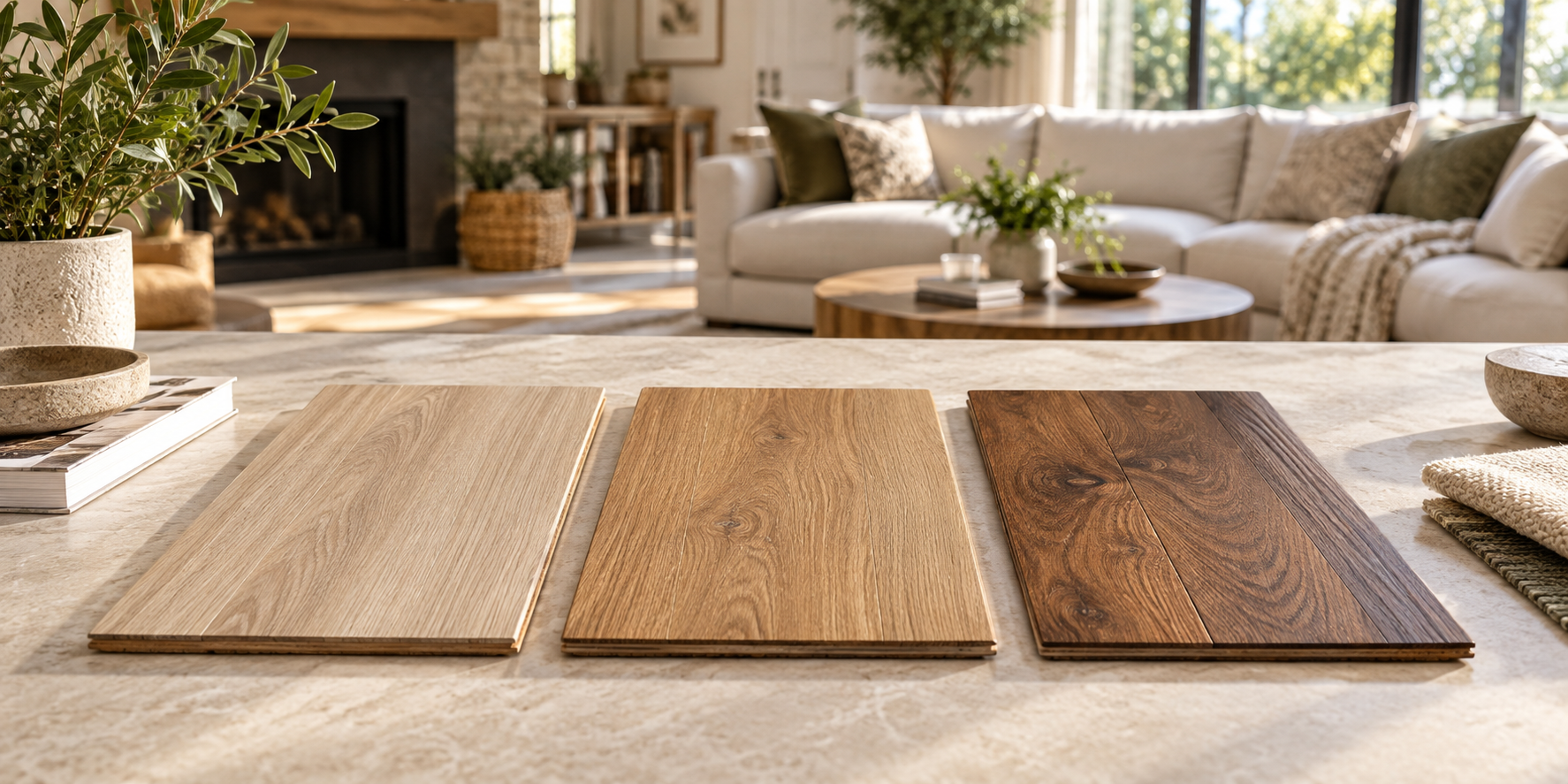
Bring samples home, too. View them in daylight and under your evening lighting, next to your cabinets and furniture.
Planning New Flooring in Metro Detroit?
Komunale connects homeowners with independent local contractors for flooring and other home improvement projects.
Visit Komunale.com and complete the project request form with your location, the rooms involved, and the flooring options you are considering.
Komunale is a contractor referral and marketing platform. Installation, pricing, agreements, and project execution are handled directly between homeowners and independent contractors.
0 Comments